How to Find the Value of Your Collectibles: PriceCharting and Other Price Guides Explained
By Olika
How to Find the Value of Your Collectibles: PriceCharting and Other Price Guides Explained
Look up the same Nintendo 64 game on three different sites and you can easily get three different prices. None of them is necessarily wrong. They're just measuring different things.
That's the part most price guides don't tell you up front. "What is this worth?" really means: what did this exact item, in this condition, recently sell for, in a market I can actually sell in? Once you ask the question that way, finding a realistic value gets a lot easier.
Short answer: To find the value of a collectible, identify the exact item (edition, region, variant), judge its condition honestly, then compare recent sold prices, not asking prices, on a price guide or marketplace built for that category. PriceCharting is a good start for video games, trading cards and comics. Discogs, BrickLink, Cardmarket and Numista are better fits for vinyl, LEGO, European card markets and coins.
Why does the same item have different prices?
A collectible's price depends on several things that price guides handle differently:
- Asking price vs sold price. Anyone can list a game for €500. Only completed sales show what buyers actually paid.
- Condition and completeness. A loose cartridge, a complete-in-box copy and a factory-sealed copy can be worth very different amounts.
- Variant and region. PAL vs NTSC, first print vs reprint, holo vs reverse holo. Small details move prices.
- Market. A price built from US sales won't always match what a buyer in Denmark or Germany will pay once shipping and import costs are included.
- Time. Prices move. A figure based on the last two years of sales and one based on last week can tell different stories.
A good valuation takes all five into account.
What is PriceCharting?
PriceCharting is a price guide website that tracks the market value of collectibles based on historic sales. It started with video games and now covers a much wider range of categories.
What collectibles does PriceCharting cover?
| Category | Examples |
|---|---|
| Video games and consoles | Retro and modern games, consoles, accessories |
| Trading cards | Pokémon, Magic: The Gathering, Yu-Gi-Oh!, One Piece, Disney Lorcana, sports cards |
| Comic books | Raw and graded comics |
| Funko Pop | Vinyl figures |
| LEGO | Sets |
| Coins | US coins |
How does PriceCharting calculate prices?
According to PriceCharting, its values are based on historic sales and calculated with its own algorithm. Its methodology page says it assigns a condition to each sale by reading the listing's title and description.
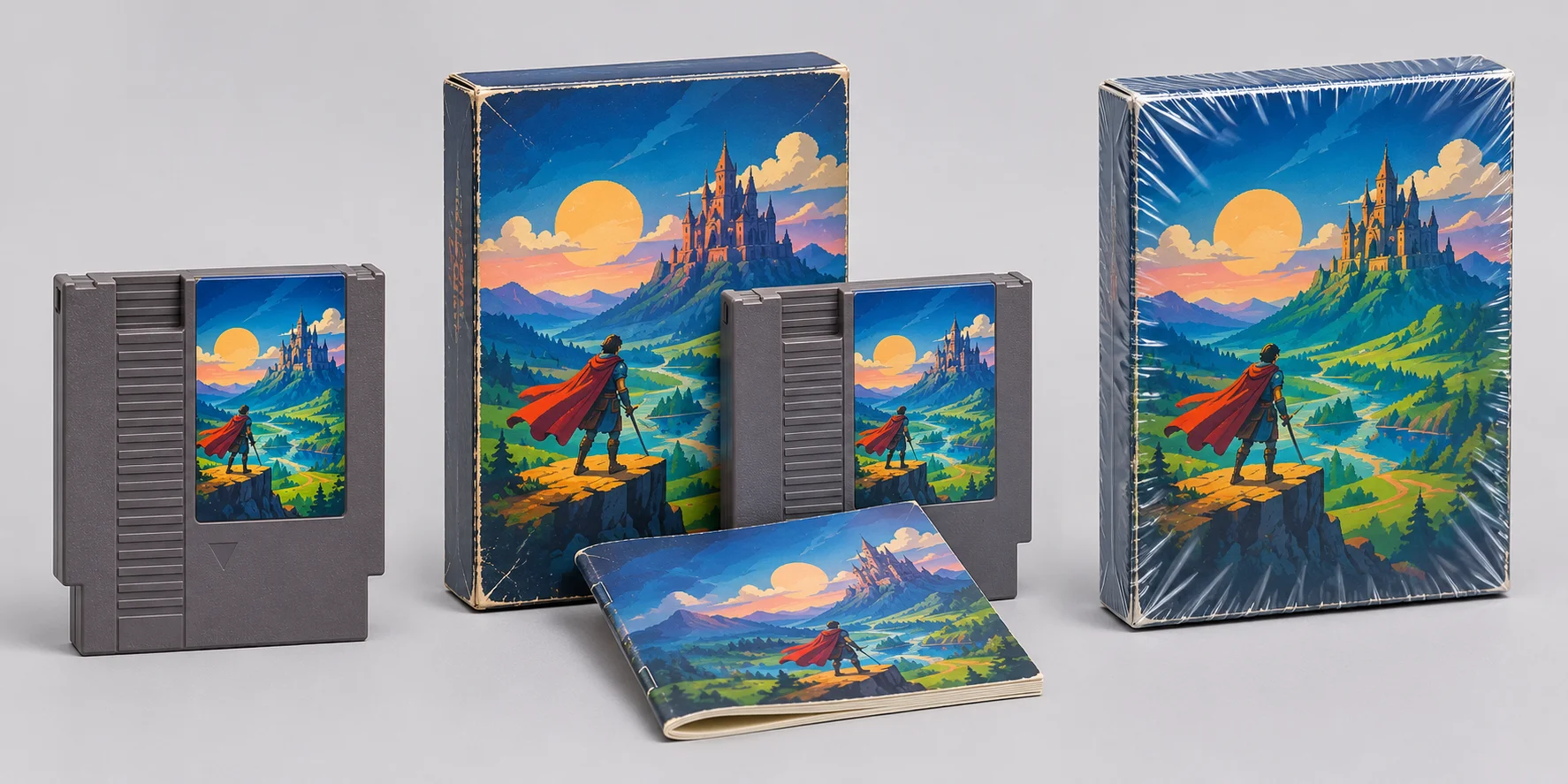
For video games, prices are split by condition:
- Loose: just the cartridge or disc.
- Complete (CIB, "complete in box"): the game with its original box and manual.
- New: factory sealed.
- Graded: a sealed item graded by a grading company such as VGA.
Box-only and manual-only prices are also shown for many games, which is useful if you're trying to complete a copy.
Is PriceCharting free?
Looking up prices is free. PriceCharting also has a free collection tracker where you can log items by condition and quantity and scan UPC barcodes. Paid tiers add extra tools on top. There are apps for iPhone and Android.
Is PriceCharting accurate?
For popular items with lots of sales, PriceCharting is usually a solid reference point. Keep three limits in mind:
- It's largely based on US sales data, so European prices can differ.
- Automatic condition sorting depends on how sellers describe their listings. A "complete" copy missing its manual can slip through.
- Rare items have fewer sales, so a single unusual sale can move the price a lot.
Use PriceCharting to get a range, then check a few real sales yourself before you buy or sell anything expensive.
How do you check sold prices on eBay?
eBay's sold listings are one of the most useful free sources of real prices, because they show what people actually paid.
- Search for your item on eBay.
- On desktop, find Show only in the left-hand filters and tick Sold items. In the app, open Filter and choose Sold items.
- Open a few results and compare photos, condition and what's included. Don't just read the price.
Two things to know:
- Sold listings in search only cover roughly the last 90 days. Sellers with Seller Hub access can use eBay's Product research tool, which goes back up to three years.
- eBay also has a Price Guide for trading cards (US only). It's built from completed eBay sales, includes accepted Best Offer prices, covers up to two years of transactions and is updated daily.
Which price guide should you use for each type of collectible?
No single site covers everything well. Here's where each one is strongest.
| Collectible | Where to look | What it shows |
|---|---|---|
| Video games | PriceCharting, eBay sold listings | Prices by condition (loose, CIB, new, graded) |
| Trading cards (US) | TCGplayer, eBay Price Guide, PriceCharting | Market prices from recent sales, graded and raw |
| Trading cards (Europe) | Cardmarket | Price trend and averages from sales on Europe's largest card marketplace |
| Vinyl, CDs, cassettes | Discogs | Lowest, median and highest prices from past sales of each specific pressing |
| LEGO | BrickLink, PriceCharting | Average sold prices for new and used sets, minifigures and parts |
| Coins | Numista, PriceCharting (US coins) | Values by year and grade |
| Comic books | GoCollect, CovrPrice, PriceCharting | Sales of graded and raw comics |
| Watches | Chrono24 | Price charts based on marketplace data |
| Antiques and general collectibles | WorthPoint (paid) | Historical prices from auction houses and marketplaces |
Trading cards: TCGplayer and Cardmarket
TCGplayer is a large US card marketplace. Its Market Price is based on recent sales rather than current listings, which makes it more reliable than the lowest asking price.
If you live in Europe, Cardmarket is usually the better reference. Its prices come from European sellers and buyers, so they match what you'll actually pay or get here. Cardmarket shows both a price trend and averages over different periods. If those numbers are far apart, the card probably doesn't sell often, so be careful.
Vinyl records: Discogs
For records, Discogs is the standard. Every pressing has its own page, so you can tell a first press from a later reissue. That matters a lot, because two copies of the same album can have very different values.
The sales statistics on each release page show the lowest, median and highest prices from past Discogs sales. Those figures don't separate a near-mint copy from a worn one, so compare your copy's condition with recent sales before trusting the median.
LEGO: BrickLink
BrickLink is the largest marketplace for LEGO sets, minifigures and individual parts. Its price guide shows two things side by side: what items sold for over the last six months, and what they're listed for right now, both split into new and used. For valuing a set, use the sold prices.
Coins: Numista
Numista is a large community coin catalogue. Its values are estimated by grade and year, based on what members report and on sales from online platforms. Common coins with lots of data are usually fine. For rare coins, check auction results or ask a dealer as well.
A four-step method for finding a realistic value
Whatever you collect, this works:
- Identify the exact item. Edition, region, variant, print run, catalogue number. Barcodes help with modern items.
- Grade it honestly. Note what's included (box, manual, inserts) and any damage. Be stricter with your own items than you'd be with someone else's.
- Compare at least three recent sold prices for the same item in the same condition. Ignore unsold listings and extreme outliers.
- Adjust for your market. Think about shipping, fees and whether local buyers pay more or less than the guide suggests.
You end up with a range, not a single number. For most collectors, that's more useful anyway.
What a collection is worth vs what you'd get for it
Price guides describe the market value of single items. If you sell a whole collection at once, especially to a shop, expect less, because the buyer needs room to resell it. Insurance is another case again: insurers may want documentation of each item and its condition, not just a total.
That's why keeping records matters. If you know what you paid, what condition each item is in and what it's roughly worth today, you're ready to sell, insure or simply enjoy watching your collection grow.
Keep your values next to your collection
In Kollectia, every item can store a purchase price and an estimated value alongside its condition and other details. When you check a price on PriceCharting, Discogs or Cardmarket, add it to the item. Over time you build your own record of what you paid and what your collection is worth. It's free, and it works for video games, trading cards, comics, movies and pretty much anything else you collect.
A price guide will tell you what something sold for. Your own records tell you what it's worth to you.
Frequently asked questions
What does CIB mean in video game collecting?
CIB stands for "complete in box." It means the game comes with its original box and manual. CIB copies are usually worth more than loose cartridges or discs.
Is PriceCharting accurate for European collectors?
It's a useful reference, but it's largely based on US sales. For trading cards in Europe, Cardmarket usually reflects local prices better. For games, check recent sales on local marketplaces as well.
What's the difference between asking price and sold price?
The asking price is what a seller hopes to get. The sold price is what a buyer actually paid. Always base your valuation on sold prices.
How far back can I see sold prices on eBay?
Sold listings in eBay search cover roughly the last 90 days. Sellers with access to eBay's Product research tool in Seller Hub can see up to three years of sales data.
What's the best way to value a large collection?
Value the most expensive items one by one, using recent sold prices. For the rest, an estimated range per category is usually enough. Keeping each item's condition and value in a collection tracker saves you from starting over every time.